
Unanticipated Problems Clearly Defined
Understand how unanticipated problems are defined under U.S. regulations and OHRP guidance, including the three criteria that have to be met before something goes to the IRB.
Beyond Adverse Events
Learn why a UP isn't only a medical event. It can be a protocol deviation, a data issue, a confidentiality breach, or a newly identified risk.
Recognizing UPs in Real-World Practice
Learn the signals that often point to a UP, like a protocol change, a consent update, an enrollment pause, or added monitoring, and what each one means for reporting.
When Safety Information Becomes an Unanticipated Problem
Unanticipated Problems get reported all over the map. Some sites flag everything, others miss the ones that count, and the reason is usually the same. People aren't sure what separates a UP from a routine adverse event. This session focuses on how unanticipated problems are defined and applied under U.S. regulations, using OHRP guidance to clarify when new information rises above a routine AE. You'll learn how UPs are identified, why they reach past medical events, and how they tie together safety, ethics, data privacy, and participant protection. We walk through the three required criteria and show how sites usually recognize a UP in practice, through a protocol change, a consent update, an enrollment pause, added monitoring, or a participant notification. We also sort out where adverse events and UPs overlap, so you know what belongs in front of the IRB and why.
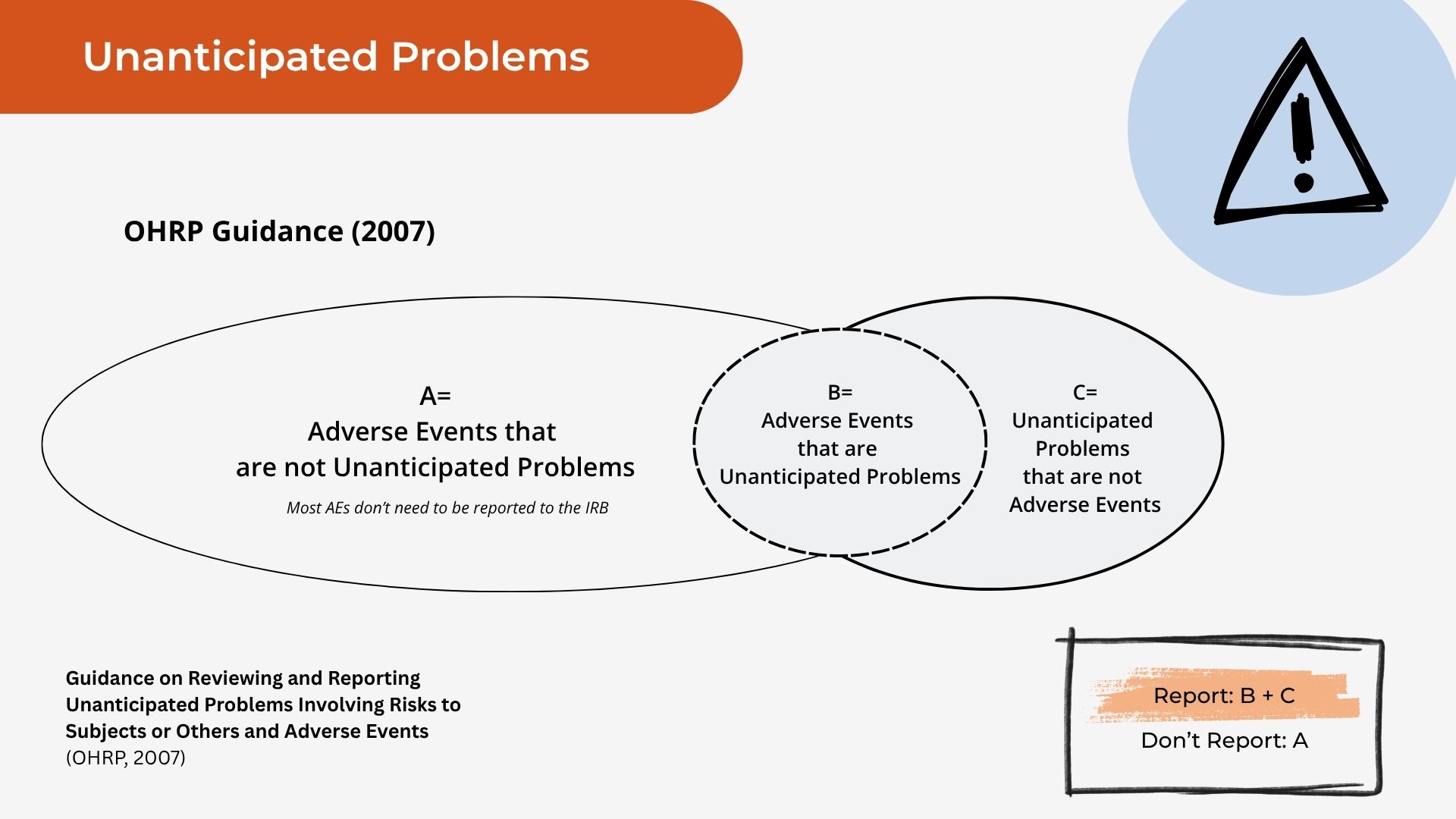
AE or UP? The overlap.
Where adverse events and unanticipated problems meet, and where they don't.
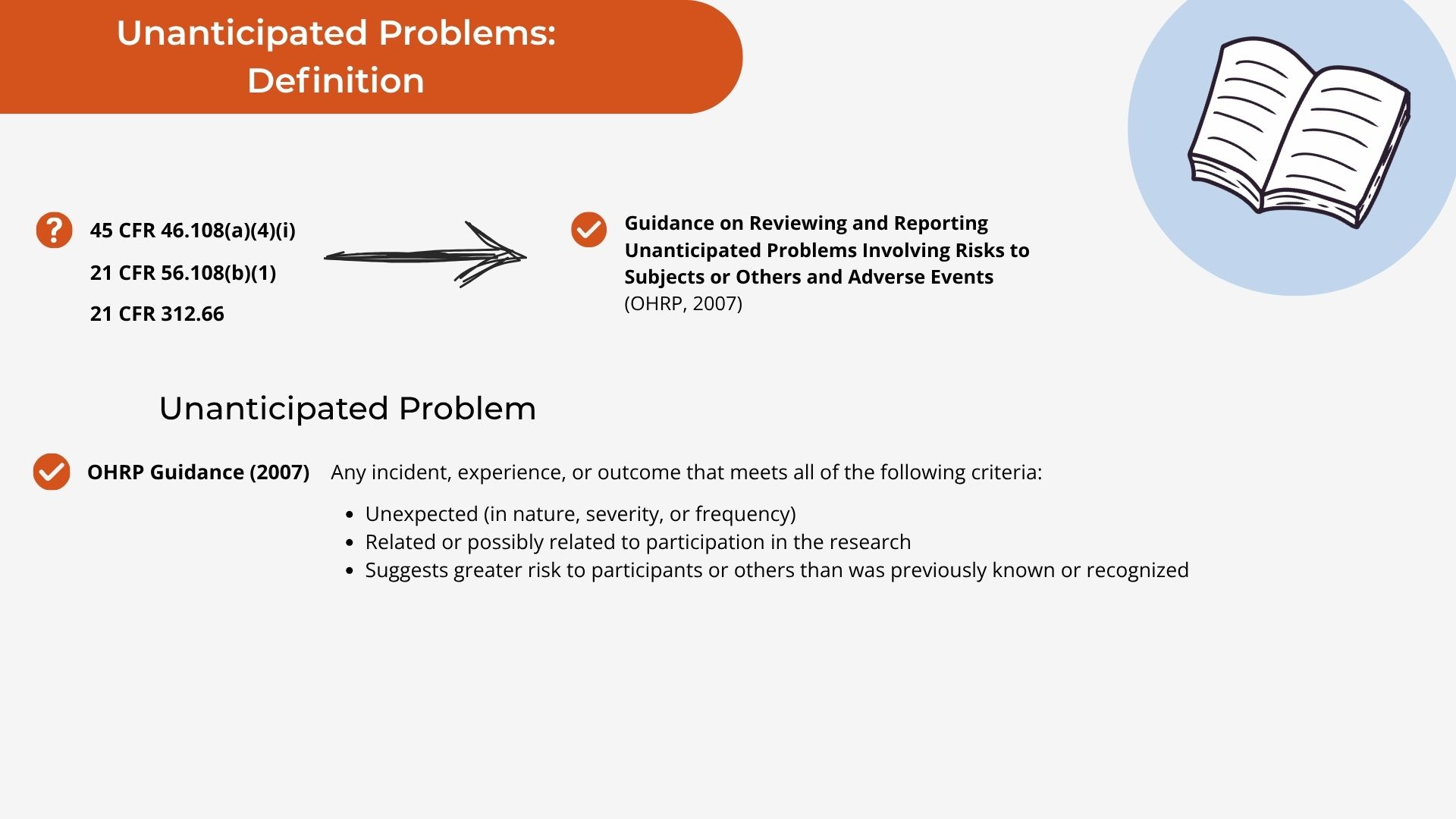
The three UP criteria.
The three boxes an event has to check before it reaches the IRB.
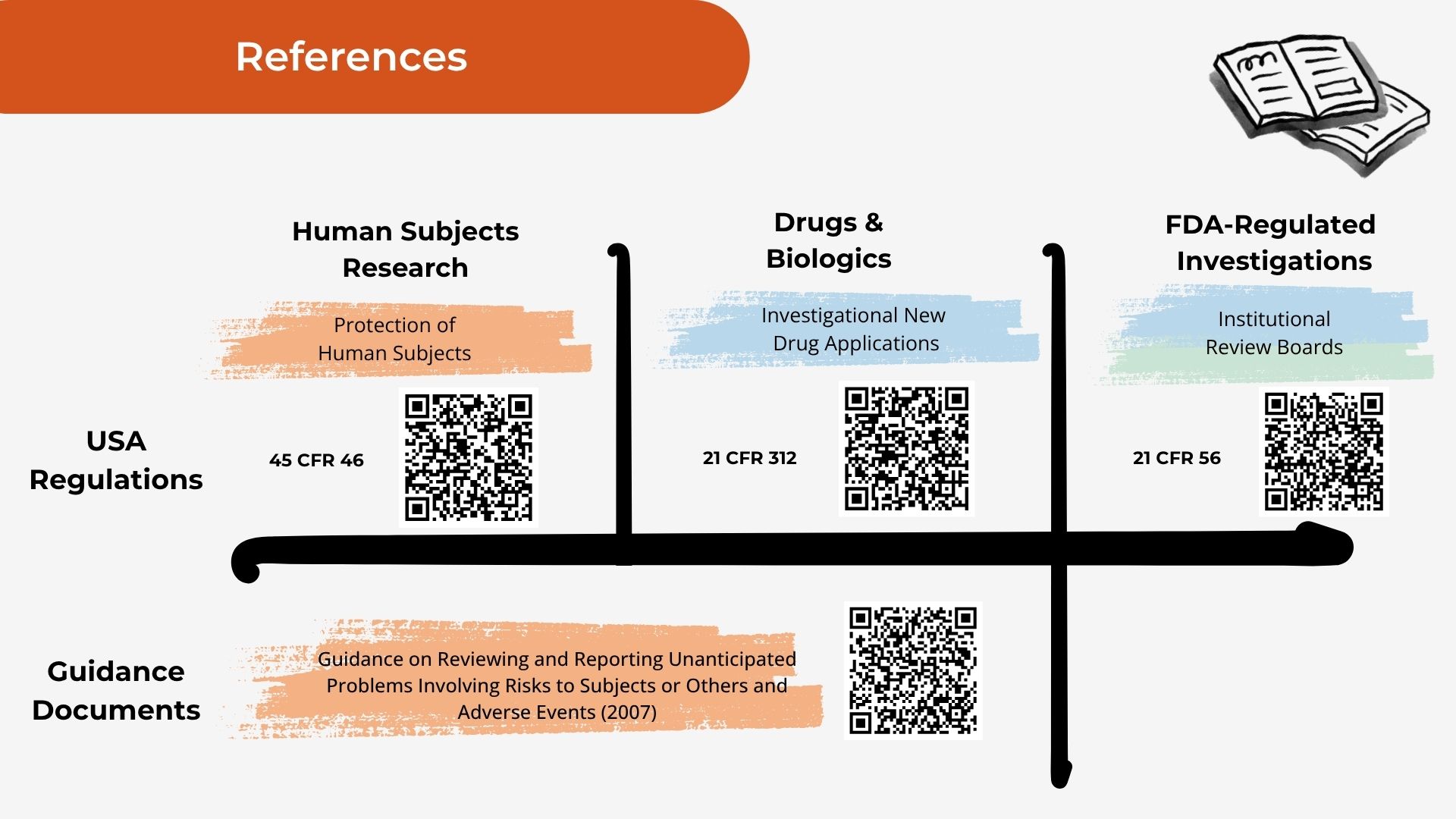
Straight from OHRP.
Built on OHRP's framework, with the guidance cited.
Want to keep building your safety reporting foundation?
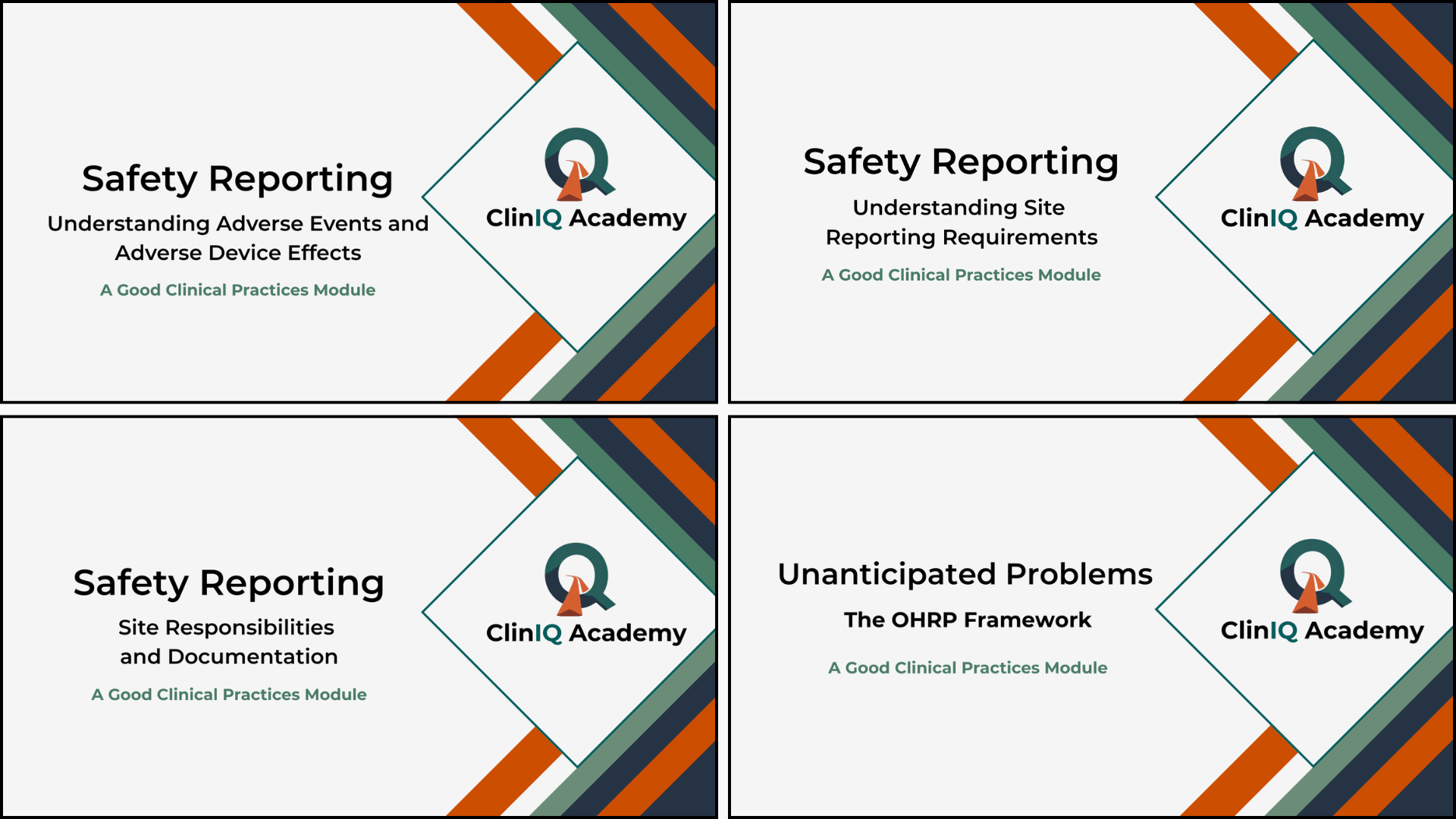
This session is part of the Safety Reporting for Sites: A Foundations Series bundle, which brings four safety reporting sessions together into one cohesive learning path. Available in the ClinIQ Academy catalog.
Curriculum
-
1
-
(Included in full purchase)
Unanticipated Problems
-
(Included in full purchase)
Know a UP when you see one.
Unanticipated problems rarely announce themselves. What you see first is usually a protocol change or a pause in enrollment. Build the confidence to recognize when new information has shifted participant risk, and what you owe the IRB when it does.
$5.00